Buy jpss.eu ?
We are moving the project
jpss.eu .
Are you interested in purchasing the domain
jpss.eu ?
domain@kv-gmbh.de · 0541-91531010
Buy jpss.eu ?
Can planetary orbits intersect?
No, planetary orbits cannot intersect. In our solar system, each planet orbits the sun in its own distinct path, and these paths do not cross or intersect. This is due to the gravitational forces between the planets and the sun, which keep their orbits separate and stable. If planetary orbits were to intersect, it would lead to chaotic and unstable interactions between the planets, which is not observed in our solar system. **
Do the orbits of the planets in space run parallel?
No, the orbits of planets in space do not run parallel to each other. Each planet in our solar system orbits the Sun in its own unique path, known as an elliptical orbit. These orbits are tilted and positioned at different angles relative to each other, resulting in a variety of orbital paths rather than parallel ones. **

Similar search terms for Orbits
Top-Angebote
Products related to Orbits:
-
Research-powered Eye Duo - Skincare Kit Charlotte Tilbury 3315 Charlotte's Research-powered Eye Duo Size:Darlings, unlock the secret to eyes that appear brighter, depuffed, smoother and younger with my Research-Powered Eye Duo! This CharlotteTilbury.com EXCLUSIVE skincare duo includes:94,05 £*Shipping: 0,00 £Secure redirect to the provider
-
Motorola Defy Satellite Link Two-Way Satellite Messenger with SOS (BM3A01) - BlackStay connected wherever your adventures take you with the Motorola Defy Satellite Link BM3A01. Designed for hikers, campers, travellers, off-road enthusiasts, and outdoor professionals, this compact and rugged satellite communicator enables two-way satellite messaging, location sharing, and SOS emergency assistance, even in areas without mobile network coverage. Pairing seamlessly with compatible Android and iOS smartphones via Bluetooth, it extends your communication capabilities far beyond traditional cellular networks. Built to withstand harsh environments, the Motorola Defy Satellite Link features a rugged IP68-rated and MIL-STD-810H certified design, offering excellent resistance to water, dust, drops, and extreme temperatures. The integrated GPS technology allows you to share your location with family, friends, or colleagues, providing extra peace of mind during outdoor adventures or remote work. The dedicated SOS button offers instant access to emergency response services (subscription required), while the rechargeable battery delivers multiple days of operation on a single charge. Lightweight, compact, and easy to carry, the Motorola Defy Satellite Link is an essential companion for anyone who needs reliable communication and safety when venturing beyond cellular coverage.69,49 £*Shipping: 0,00 £Secure redirect to the provider
-
Uplift Essentials Bird Feeder High Definition Wildlife Observation Bird Feeder High Definition Wildlife Observation"Experience the beauty of nature from the comfort of your living room with the CrystalView Window Bird Feeder. Crafted from ultraclear, heavyduty acrylic, this ""bird house"" feeder offers an unobstructed, 360 view of your favorite local birds as they..."31,97 $*Shipping: 0,00 $Secure redirect to the provider
-
Multisell Products Hub High Tech Construction Bricks Set, New Creative Technology Space Station Transparent Globe, Toy Gifts For Children High Tech Construction Bricks Set, New Creative Technology Space Station Transparent Globe, Toy Gifts For ChildrenInnovative Building Fun for Kids: Bring the world of construction and creativity together with the New Creative Technology Space Station Transparent Globe Building Blocks. This hightech, engaging toy set is designed for young minds to explore the...179,97 $*Shipping: 0,00 $Secure redirect to the provider




-
Why are there elliptical orbits?
Elliptical orbits occur due to the gravitational forces between celestial bodies. When an object is under the influence of a central force, such as gravity, its path will often take the shape of an ellipse. This is because the force of gravity is stronger at shorter distances, causing the object to move faster when closer to the center of mass and slower when farther away. As a result, the object follows a curved path that is elliptical in shape. **
-
On which orbits do planets move?
Planets move on elliptical orbits around the Sun. These orbits are not perfect circles but slightly elongated, with the Sun located at one of the foci of the ellipse. The gravitational pull of the Sun keeps the planets in their orbits, causing them to move in a predictable path around the Sun. **
-
Why are the planet orbits elliptical?
The planet orbits are elliptical because of the gravitational force exerted by the sun. According to Kepler's laws of planetary motion, planets move in elliptical orbits with the sun at one of the foci. This means that the gravitational force between the sun and the planet causes the planet to move in a curved path, resulting in an elliptical orbit. The shape of the orbit is determined by the balance between the planet's velocity and the gravitational force pulling it towards the sun. **
-
'Between the orbits of the planets.'
The asteroid belt is located between the orbits of Mars and Jupiter. It is a region in our solar system where millions of small rocky bodies, called asteroids, orbit the sun. The asteroid belt is thought to be the remnants of a failed planet formation, as the gravitational pull of Jupiter prevented the material in this region from coalescing into a single planet. The largest asteroid in the belt is Ceres, which is also classified as a dwarf planet. **


Do the orbits of the planets in space run parallel to each other?
No, the orbits of the planets in space do not run parallel to each other. Each planet in our solar system has its own unique orbit around the Sun, with varying distances, speeds, and inclinations. These orbits are not parallel but rather follow elliptical paths that are tilted and intersect at different angles. **
In which direction do the planetary orbits run?
The planetary orbits run counterclockwise around the Sun when viewed from above the Earth's North Pole. This means that the planets move in the same direction as the Sun's rotation. This counterclockwise motion is known as prograde motion. The planets all orbit the Sun in roughly the same plane, known as the ecliptic plane. **
Top-Angebote
Products related to Orbits:
-
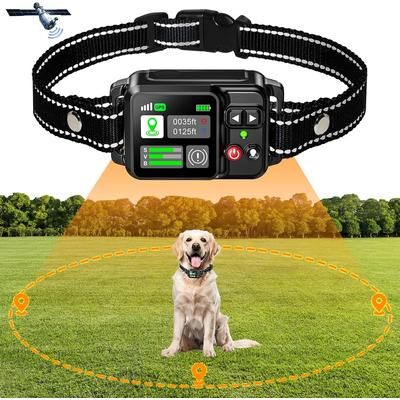
The Handy Homestead GPS Wireless Dog Fencing System Electric Pet Containment With Satellite Technology GPS Wireless Dog Fencing System Electric Pet Containment With Satellite TechnologyEnsure your dogs safety without the hassle of traditional fencing with our GPS dog fence system. Designed for pet owners who want a reliable, invisible barrier, this system uses advanced GPS Satellite Technology to create a customizable perimeter...109,97 $*Shipping: 0,00 $Secure redirect to the provider
-
PetsAreLife GPS Wireless Dog Fencing System, Electric Dog Fence With GPS Electric Satellite Technology, Electric Pet Fencing System GPS Wireless Dog Fencing System, Electric Dog Fence With GPS Electric Satellite Technology, Electric Pet Fencing SystemKeep your best friend safe, happy, and free to roamwithout ever worrying about escapes. Our GPS Wireless Dog Fencing System combines cuttingedge satellite positioning with reliable electric borders to give you complete control over your pets play...114,99 $*Shipping: 0,00 $Secure redirect to the provider
-
Research-powered Eye Duo - Skincare Kit Charlotte Tilbury 3315 Charlotte's Research-powered Eye Duo Size:Darlings, unlock the secret to eyes that appear brighter, depuffed, smoother and younger with my Research-Powered Eye Duo! This CharlotteTilbury.com EXCLUSIVE skincare duo includes:94,05 £*Shipping: 0,00 £Secure redirect to the provider
-
Motorola Defy Satellite Link Two-Way Satellite Messenger with SOS (BM3A01) - BlackStay connected wherever your adventures take you with the Motorola Defy Satellite Link BM3A01. Designed for hikers, campers, travellers, off-road enthusiasts, and outdoor professionals, this compact and rugged satellite communicator enables two-way satellite messaging, location sharing, and SOS emergency assistance, even in areas without mobile network coverage. Pairing seamlessly with compatible Android and iOS smartphones via Bluetooth, it extends your communication capabilities far beyond traditional cellular networks. Built to withstand harsh environments, the Motorola Defy Satellite Link features a rugged IP68-rated and MIL-STD-810H certified design, offering excellent resistance to water, dust, drops, and extreme temperatures. The integrated GPS technology allows you to share your location with family, friends, or colleagues, providing extra peace of mind during outdoor adventures or remote work. The dedicated SOS button offers instant access to emergency response services (subscription required), while the rechargeable battery delivers multiple days of operation on a single charge. Lightweight, compact, and easy to carry, the Motorola Defy Satellite Link is an essential companion for anyone who needs reliable communication and safety when venturing beyond cellular coverage.69,49 £*Shipping: 0,00 £Secure redirect to the provider
-
Can planetary orbits intersect?
No, planetary orbits cannot intersect. In our solar system, each planet orbits the sun in its own distinct path, and these paths do not cross or intersect. This is due to the gravitational forces between the planets and the sun, which keep their orbits separate and stable. If planetary orbits were to intersect, it would lead to chaotic and unstable interactions between the planets, which is not observed in our solar system. **
-
Do the orbits of the planets in space run parallel?
No, the orbits of planets in space do not run parallel to each other. Each planet in our solar system orbits the Sun in its own unique path, known as an elliptical orbit. These orbits are tilted and positioned at different angles relative to each other, resulting in a variety of orbital paths rather than parallel ones. **
-
Why are there elliptical orbits?
Elliptical orbits occur due to the gravitational forces between celestial bodies. When an object is under the influence of a central force, such as gravity, its path will often take the shape of an ellipse. This is because the force of gravity is stronger at shorter distances, causing the object to move faster when closer to the center of mass and slower when farther away. As a result, the object follows a curved path that is elliptical in shape. **
-
On which orbits do planets move?
Planets move on elliptical orbits around the Sun. These orbits are not perfect circles but slightly elongated, with the Sun located at one of the foci of the ellipse. The gravitational pull of the Sun keeps the planets in their orbits, causing them to move in a predictable path around the Sun. **
Similar search terms for Orbits
-
Uplift Essentials Bird Feeder High Definition Wildlife Observation Bird Feeder High Definition Wildlife Observation"Experience the beauty of nature from the comfort of your living room with the CrystalView Window Bird Feeder. Crafted from ultraclear, heavyduty acrylic, this ""bird house"" feeder offers an unobstructed, 360 view of your favorite local birds as they..."31,97 $*Shipping: 0,00 $Secure redirect to the provider
-
Multisell Products Hub High Tech Construction Bricks Set, New Creative Technology Space Station Transparent Globe, Toy Gifts For Children High Tech Construction Bricks Set, New Creative Technology Space Station Transparent Globe, Toy Gifts For ChildrenInnovative Building Fun for Kids: Bring the world of construction and creativity together with the New Creative Technology Space Station Transparent Globe Building Blocks. This hightech, engaging toy set is designed for young minds to explore the...179,97 $*Shipping: 0,00 $Secure redirect to the provider
-
SAGE Publications Case Study Research and Applications: Design and MethodsRecognized as one of the most cited methodology books in the social sciences, the Sixth Edition of Robert K. Yin′s bestselling text provides a complete portal to the world of case study research. With the integration of 11 applications in this edition, the book gives readers access to exemplary case studies drawn from a wide variety of academic and applied fields. Ultimately, Case Study Research and Applications will guide students in the successful use and application of the case study research method.59,99 £*Shipping: 0,00 £Secure redirect to the provider
-
Our Choice F-Connector Satellite & TV Coaxial Splitter - 3-WayOur F Connector splitter units enable users to divide an RF coaxial signal from a single source to three devices. For instance, one satellite dish can be connected to three Sky boxes, Freesat, or Virgin boxes using an F type connector.10,99 £*Shipping: 0,00 £Secure redirect to the provider
-
Why are the planet orbits elliptical?
The planet orbits are elliptical because of the gravitational force exerted by the sun. According to Kepler's laws of planetary motion, planets move in elliptical orbits with the sun at one of the foci. This means that the gravitational force between the sun and the planet causes the planet to move in a curved path, resulting in an elliptical orbit. The shape of the orbit is determined by the balance between the planet's velocity and the gravitational force pulling it towards the sun. **
-
'Between the orbits of the planets.'
The asteroid belt is located between the orbits of Mars and Jupiter. It is a region in our solar system where millions of small rocky bodies, called asteroids, orbit the sun. The asteroid belt is thought to be the remnants of a failed planet formation, as the gravitational pull of Jupiter prevented the material in this region from coalescing into a single planet. The largest asteroid in the belt is Ceres, which is also classified as a dwarf planet. **
-
Do the orbits of the planets in space run parallel to each other?
No, the orbits of the planets in space do not run parallel to each other. Each planet in our solar system has its own unique orbit around the Sun, with varying distances, speeds, and inclinations. These orbits are not parallel but rather follow elliptical paths that are tilted and intersect at different angles. **
-
In which direction do the planetary orbits run?
The planetary orbits run counterclockwise around the Sun when viewed from above the Earth's North Pole. This means that the planets move in the same direction as the Sun's rotation. This counterclockwise motion is known as prograde motion. The planets all orbit the Sun in roughly the same plane, known as the ecliptic plane. **
* All prices are inclusive of VAT and, if applicable, plus shipping costs. The offer information is based on the details provided by the respective shop and is updated through automated processes. Real-time updates do not occur, so deviations can occur in individual cases. ** Note: Parts of this content were created by AI.