Buy jpss.eu ?
We are moving the project
jpss.eu .
Are you interested in purchasing the domain
jpss.eu ?
domain@kv-gmbh.de · 0541-91531010
Buy jpss.eu ?
What is the difference between private space missions and research?
Private space missions are typically conducted by commercial companies or individuals with the goal of achieving specific objectives, such as launching satellites, conducting commercial activities in space, or even sending tourists to space. These missions are driven by profit and business interests. On the other hand, research missions are focused on advancing scientific knowledge and understanding of space, including studying celestial bodies, conducting experiments in microgravity, and exploring the potential for human colonization of other planets. Research missions are often conducted by government space agencies, universities, and international collaborations, with the primary goal of expanding human knowledge and understanding of the universe. **
What is the difference between perception and observation?
Perception refers to the way we interpret and make sense of sensory information, including what we see, hear, and feel. It is influenced by our past experiences, beliefs, and expectations. Observation, on the other hand, is the act of simply noticing and taking in sensory information without necessarily interpreting or making sense of it. Observation is more objective and focused on the raw data, while perception involves the subjective interpretation of that data. In other words, observation is the act of seeing or noticing something, while perception is the mental process of understanding and interpreting what we have observed. **

Similar search terms for Difference
Top-Angebote
Products related to Difference:
-
Penguin Never Split the Difference: Negotiating as if Your Life Depended on ItA former FBI hostage negotiator offers a new, field-tested approach to - effective in any situation.'Riveting' Adam Grant'Stupendous' The Week'Brilliant' GuardianAfter a stint policing the rough streets of Kansas City, Missouri, Chris Voss joined the FBI, where his career as a kidnapping negotiator brought him face-to-face with bank robbers, gang leaders and terrorists. Never Split the Difference takes you inside his world of high-stakes negotiations, revealing the nine key principles that helped Voss and his colleagues succeed when it mattered the most - when people's lives were at stake.Rooted in the real-life experiences of an intelligence professional at the top of his game, Never Split the Difference will give you the competitive edge in any discussion. PRAISE FOR NEVER SPLIT THE DIFFERENCE'My pick for book of the year.' Forbes'Who better to learn [negotiation] from than Chris Voss, whose skills have saved lives and averted disaster?' Daily Mail'Filled with insights that apply to everyday negotiations.' Business Insider'It's rare that a book is so gripping and entertaining while still being actionable and applicable.' Inc.'A business book you won't be able to put down.' Fortune7,99 £*Shipping: 2,99 £Secure redirect to the provider
-
Random House Books/Vermilion Never Split the Difference and Atomic Habits 2 Books Collection SetNever Split the Difference and Atomic Habits 2 Books Collection Set Description Never Split the Difference: Negotiating as if Your Life Depended on It THE HUGE INTERNATIONAL BESTSELLERA former FBI hostage negotiator offers a field-tested approach to negotiating - effective in any situation. 'Riveting' Adam Grant'Stupendous' The Week'Brilliant' After a stint policing the rough streets of Kansas City, Missouri, Chris Voss joined the FBI, where his career as a kidnapping negotiator brought him face-to-face with bank robbers, gang leaders and terrorists. Never Split the Difference takes you inside his world of high-stakes negotiations, revealing the nine key principles that helped Voss and his colleagues succeed when it mattered the most - when people's lives were at stake. Rooted in the real-life experiences of an intelligence professional at the top of his game, Never Split the Difference will give you the competitive edge in any discussion PRAISE FOR NEVER SPLIT THE DIFFERENCE'Such a great book that is relevant to more than just FBI negotiations: it's relevant to my relationship with my partner, to my business, to everything in between.' Steven Bartlett, entrepreneur and host of the Diary of a CEO podcast'It's rare that a book is so gripping and entertaining while still being actionable and applicable.' Inc. 'A business book you won't be able to put down.' Fortune Atomic Habits: the life-changing million-copy #1 bestseller THE PHENOMENAL INTERNATIONAL BESTSELLER: OVER 15 MILLION COPIES SOLD WORLDWIDETransform your life with tiny changes in behaviour, starting now. People think that when you want to change your life, you need to think big. But world-renowned habits expert James Clear has discovered another way. He knows that real change comes from the compound effect of hundreds of small decisions: doing two push-ups a day, waking up five minutes early, or holding a single short phone call. He calls them atomic habits. In this ground-breaking book, Clears reveals exactly how these minuscule changes can grow into such life-altering outcomes. He uncovers a handful of simple life hacks (the forgotten art of Habit Stacking, the unexpected power of the Two Minute Rule, or the trick to entering the Goldilocks Zone), and delves into cutting-edge psychology and neuroscience to explain why they matter. Along the way, he tells inspiring stories of Olympic gold medalists, leading CEOs, and distinguished scientists who have used the science of tiny habits to stay productive, motivated, and happy. These small changes will have a revolutionary effect on your career, your relationships, and your life.14,99 £*Shipping: 2,99 £Secure redirect to the provider
-
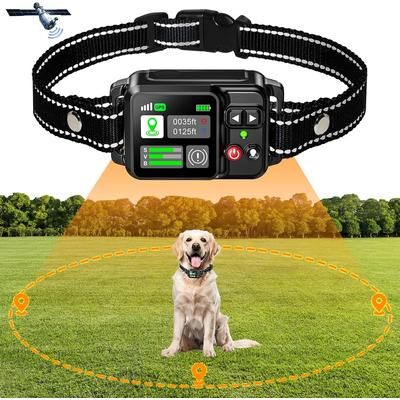
The Handy Homestead GPS Wireless Dog Fencing System Electric Pet Containment With Satellite Technology GPS Wireless Dog Fencing System Electric Pet Containment With Satellite TechnologyEnsure your dogs safety without the hassle of traditional fencing with our GPS dog fence system. Designed for pet owners who want a reliable, invisible barrier, this system uses advanced GPS Satellite Technology to create a customizable perimeter...109,97 $*Shipping: 0,00 $Secure redirect to the provider
-
Inspired Finds Reusable Find The Difference Game Wipe Clean Activity Cards For Kids Focus And Attention Training primaryThese reusable wipeclean cards turn quiet time into a confidencebuilding challenge that kids actually enjoy. Designed as an attention training game, each page invites children to spot mistakes, differences, or hidden details while practicing...34,99 $*Shipping: 0,00 $Secure redirect to the provider




-
What is the difference between observation and perception?
Observation is the act of noticing or watching something carefully, while perception is the way we interpret and make sense of what we observe. Observation is the process of gathering information through our senses, while perception involves the mental processing and interpretation of that information. In other words, observation is the act of seeing, hearing, or experiencing something, while perception is the way we understand and interpret what we have observed. **
-
What distinguishes systematic observation from participant observation in field research?
Systematic observation in field research involves the structured and planned collection of data through direct observation of a specific phenomenon, often using predetermined categories or criteria. On the other hand, participant observation involves the researcher immersing themselves in the social setting being studied, actively participating in the activities and interactions of the group being observed. While systematic observation allows for a more objective and standardized approach to data collection, participant observation provides a deeper understanding of the social context and dynamics by experiencing it firsthand. Ultimately, the main distinction lies in the level of involvement and interaction between the researcher and the subjects of the study. **
-
What distinguishes systematic observation from participatory observation in field research?
Systematic observation in field research involves the structured and predetermined collection of data based on specific variables or behaviors of interest. Researchers use predefined criteria to guide their observations and ensure consistency in data collection. On the other hand, participatory observation involves the researcher immersing themselves in the social setting being studied, actively participating in the activities of the group being observed. This approach allows the researcher to gain a deeper understanding of the context and culture of the group, but may be more subjective and less structured compared to systematic observation. **
-
Is there a difference between IT technology and information technology?
The terms IT technology and information technology are often used interchangeably, but there is a subtle difference between the two. IT technology typically refers to the hardware and software used to manage and process data within an organization, such as computers, servers, and networking equipment. On the other hand, information technology encompasses a broader scope, including the management and use of information systems to support business operations and decision-making. In essence, IT technology is a subset of information technology, focusing specifically on the technology aspect of managing information. **
What is the difference between systematic and unsystematic observation?
Systematic observation involves carefully planned and structured data collection, often using specific instruments or protocols to ensure consistency and reliability. It is used to gather quantitative data and is often used in scientific research. Unsystematic observation, on the other hand, is more informal and spontaneous, involving the observer simply watching and recording what they see without a specific plan or structure. It is often used in exploratory or qualitative research to generate hypotheses or insights. Overall, the key difference lies in the level of structure and planning involved in the observation process. **
What is the difference between perception, observation, and interpretation?
Perception refers to the process of becoming aware of something through the senses, such as seeing, hearing, or feeling. Observation involves actively paying attention to something and gathering information about it through the senses. Interpretation, on the other hand, involves making sense of the information gathered through perception and observation, and assigning meaning to it based on one's knowledge, beliefs, and experiences. In summary, perception is the initial awareness, observation is the active gathering of information, and interpretation is the process of making sense of that information. **
Top-Angebote
Products related to Difference:
-
Thirstystone Make a Difference 4 Pack Tumbled Tile CoasterABSORBENT STONE-Coasters arrive as a set of 4 Coasters. Each Coaster is constructed of absorbent stone that continuously absorbs drips and condensation from your beverages while preventing stains and rings on your furniture.29,99 $*Shipping: 0,00 $Secure redirect to the provider
-
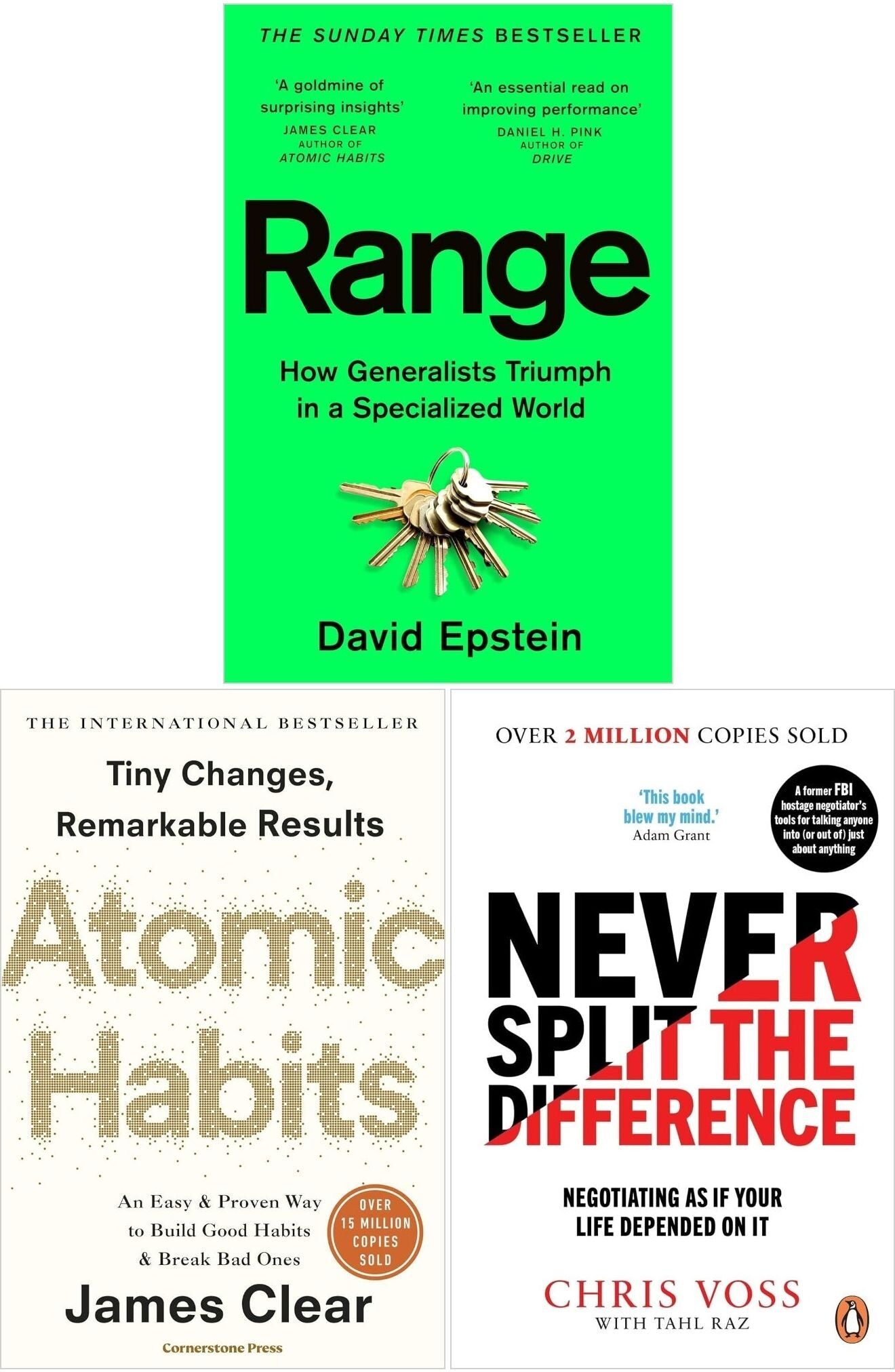
Penguin Range, Never Split the Difference and Atomic Habits 3 Books SetRange In this landmark book, David Epstein shows you that the way to succeed is by sampling widely, gaining a breadth of experiences, taking detours, experimenting relentlessly, juggling many interests – in other words, by developing range. Studying the world's most successful athletes, artists, musicians, inventors and scientists, Epstein demonstrates why in most fields – especially those that are complex and unpredictable – generalists, not specialists are primed to excel. No matter what you do, where you are in life, whether you are a teacher, student, scientist, business analyst, parent, job hunter, retiree, you will see the world differently after you've read Range. You'll understand better how we solve problems, how we learn and how we succeed. You'll see why failing a test is the best way to learn and why frequent quitters end up with the most fulfilling careers. Never Split the Difference After a stint policing the rough streets of Kansas City, Missouri, Chris Voss joined the FBI, where his career as a kidnapping negotiator brought him face-to-face with bank robbers, gang leaders and terrorists. Never Split the Difference takes you inside his world of high-stakes negotiations, revealing the nine key principles that helped Voss and his colleagues succeed when it mattered the most - when people's lives were at stake. Rooted in the real-life experiences of an intelligence professional at the top of his game, Never Split the Difference will give you the competitive edge in any discussion. Atomic Habits Transform your life with tiny changes in behaviour, starting now. People think that when you want to change your life, you need to think big. But world-renowned habits expert James Clear has discovered another way. He knows that real change comes from the compound effect of hundreds of small decisions: doing two push-ups a day, waking up five minutes early, or holding a single short phone call. He calls them atomic habits. In this ground-breaking book, Clears reveals exactly how these minuscule changes can grow into such life-altering outcomes.14,99 £*Shipping: 2,99 £Secure redirect to the provider
-
Penguin Never Split the Difference: Negotiating as if Your Life Depended on ItA former FBI hostage negotiator offers a new, field-tested approach to - effective in any situation.'Riveting' Adam Grant'Stupendous' The Week'Brilliant' GuardianAfter a stint policing the rough streets of Kansas City, Missouri, Chris Voss joined the FBI, where his career as a kidnapping negotiator brought him face-to-face with bank robbers, gang leaders and terrorists. Never Split the Difference takes you inside his world of high-stakes negotiations, revealing the nine key principles that helped Voss and his colleagues succeed when it mattered the most - when people's lives were at stake.Rooted in the real-life experiences of an intelligence professional at the top of his game, Never Split the Difference will give you the competitive edge in any discussion. PRAISE FOR NEVER SPLIT THE DIFFERENCE'My pick for book of the year.' Forbes'Who better to learn [negotiation] from than Chris Voss, whose skills have saved lives and averted disaster?' Daily Mail'Filled with insights that apply to everyday negotiations.' Business Insider'It's rare that a book is so gripping and entertaining while still being actionable and applicable.' Inc.'A business book you won't be able to put down.' Fortune7,99 £*Shipping: 2,99 £Secure redirect to the provider
-
Random House Books/Vermilion Never Split the Difference and Atomic Habits 2 Books Collection SetNever Split the Difference and Atomic Habits 2 Books Collection Set Description Never Split the Difference: Negotiating as if Your Life Depended on It THE HUGE INTERNATIONAL BESTSELLERA former FBI hostage negotiator offers a field-tested approach to negotiating - effective in any situation. 'Riveting' Adam Grant'Stupendous' The Week'Brilliant' After a stint policing the rough streets of Kansas City, Missouri, Chris Voss joined the FBI, where his career as a kidnapping negotiator brought him face-to-face with bank robbers, gang leaders and terrorists. Never Split the Difference takes you inside his world of high-stakes negotiations, revealing the nine key principles that helped Voss and his colleagues succeed when it mattered the most - when people's lives were at stake. Rooted in the real-life experiences of an intelligence professional at the top of his game, Never Split the Difference will give you the competitive edge in any discussion PRAISE FOR NEVER SPLIT THE DIFFERENCE'Such a great book that is relevant to more than just FBI negotiations: it's relevant to my relationship with my partner, to my business, to everything in between.' Steven Bartlett, entrepreneur and host of the Diary of a CEO podcast'It's rare that a book is so gripping and entertaining while still being actionable and applicable.' Inc. 'A business book you won't be able to put down.' Fortune Atomic Habits: the life-changing million-copy #1 bestseller THE PHENOMENAL INTERNATIONAL BESTSELLER: OVER 15 MILLION COPIES SOLD WORLDWIDETransform your life with tiny changes in behaviour, starting now. People think that when you want to change your life, you need to think big. But world-renowned habits expert James Clear has discovered another way. He knows that real change comes from the compound effect of hundreds of small decisions: doing two push-ups a day, waking up five minutes early, or holding a single short phone call. He calls them atomic habits. In this ground-breaking book, Clears reveals exactly how these minuscule changes can grow into such life-altering outcomes. He uncovers a handful of simple life hacks (the forgotten art of Habit Stacking, the unexpected power of the Two Minute Rule, or the trick to entering the Goldilocks Zone), and delves into cutting-edge psychology and neuroscience to explain why they matter. Along the way, he tells inspiring stories of Olympic gold medalists, leading CEOs, and distinguished scientists who have used the science of tiny habits to stay productive, motivated, and happy. These small changes will have a revolutionary effect on your career, your relationships, and your life.14,99 £*Shipping: 2,99 £Secure redirect to the provider
-
What is the difference between private space missions and research?
Private space missions are typically conducted by commercial companies or individuals with the goal of achieving specific objectives, such as launching satellites, conducting commercial activities in space, or even sending tourists to space. These missions are driven by profit and business interests. On the other hand, research missions are focused on advancing scientific knowledge and understanding of space, including studying celestial bodies, conducting experiments in microgravity, and exploring the potential for human colonization of other planets. Research missions are often conducted by government space agencies, universities, and international collaborations, with the primary goal of expanding human knowledge and understanding of the universe. **
-
What is the difference between perception and observation?
Perception refers to the way we interpret and make sense of sensory information, including what we see, hear, and feel. It is influenced by our past experiences, beliefs, and expectations. Observation, on the other hand, is the act of simply noticing and taking in sensory information without necessarily interpreting or making sense of it. Observation is more objective and focused on the raw data, while perception involves the subjective interpretation of that data. In other words, observation is the act of seeing or noticing something, while perception is the mental process of understanding and interpreting what we have observed. **
-
What is the difference between observation and perception?
Observation is the act of noticing or watching something carefully, while perception is the way we interpret and make sense of what we observe. Observation is the process of gathering information through our senses, while perception involves the mental processing and interpretation of that information. In other words, observation is the act of seeing, hearing, or experiencing something, while perception is the way we understand and interpret what we have observed. **
-
What distinguishes systematic observation from participant observation in field research?
Systematic observation in field research involves the structured and planned collection of data through direct observation of a specific phenomenon, often using predetermined categories or criteria. On the other hand, participant observation involves the researcher immersing themselves in the social setting being studied, actively participating in the activities and interactions of the group being observed. While systematic observation allows for a more objective and standardized approach to data collection, participant observation provides a deeper understanding of the social context and dynamics by experiencing it firsthand. Ultimately, the main distinction lies in the level of involvement and interaction between the researcher and the subjects of the study. **
Similar search terms for Difference
-
The Handy Homestead GPS Wireless Dog Fencing System Electric Pet Containment With Satellite Technology GPS Wireless Dog Fencing System Electric Pet Containment With Satellite TechnologyEnsure your dogs safety without the hassle of traditional fencing with our GPS dog fence system. Designed for pet owners who want a reliable, invisible barrier, this system uses advanced GPS Satellite Technology to create a customizable perimeter...109,97 $*Shipping: 0,00 $Secure redirect to the provider
-
Inspired Finds Reusable Find The Difference Game Wipe Clean Activity Cards For Kids Focus And Attention Training primaryThese reusable wipeclean cards turn quiet time into a confidencebuilding challenge that kids actually enjoy. Designed as an attention training game, each page invites children to spot mistakes, differences, or hidden details while practicing...34,99 $*Shipping: 0,00 $Secure redirect to the provider
-
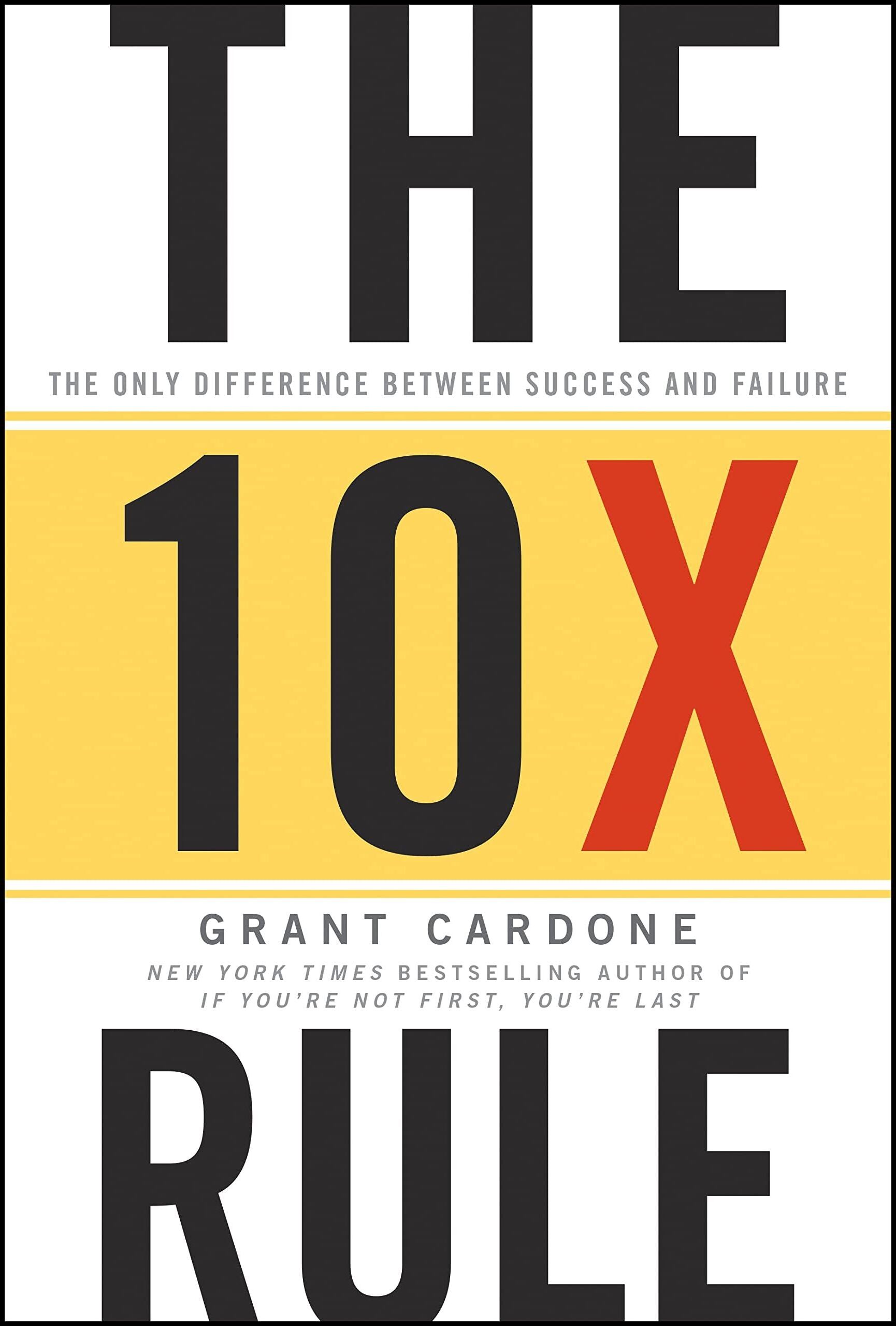
Wiley The 10X Rule: The Only Difference Between Success and Failure by Grant Cardone Motivation, Business & Self-Improvement BestsellerAchieve "Massive Action" results and accomplish your business dreams! While most people operate with only three degrees of action-no action, retreat, or normal action-if you're after big goals, you don't want to settle for the ordinary. To reach the next level, you must understand the coveted 4th degree of action. This 4th degree, also know as the 10 X Rule, is that level of action that guarantees companies and individuals realize their goals and dreams. The 10 X Rule unveils the principle of "Massive Action," allowing you to blast through business clichés and risk-aversion while taking concrete steps to reach your dreams. It also demonstrates why people get stuck in the first three actions and how to move into making the 10X Rule a discipline. Find out exactly where to start, what to do, and how to follow up each action you take with more action to achieve Massive Action results. Learn the "Estimation of Effort" calculation to ensure you exceed your targets Make the Fourth Degree a way of life and defy mediocrity Discover the time management myth Get the exact reasons why people fail and others succeed Know the exact formula to solve problems Extreme success is by definition outside the realm of normal action. Instead of behaving like everybody else and settling for average results, take Massive Action with The 10 X Rule, remove luck and chance from your business equation, and lock in massive success.15,99 £*Shipping: 2,99 £Secure redirect to the provider
-
PetsAreLife GPS Wireless Dog Fencing System, Electric Dog Fence With GPS Electric Satellite Technology, Electric Pet Fencing System GPS Wireless Dog Fencing System, Electric Dog Fence With GPS Electric Satellite Technology, Electric Pet Fencing SystemKeep your best friend safe, happy, and free to roamwithout ever worrying about escapes. Our GPS Wireless Dog Fencing System combines cuttingedge satellite positioning with reliable electric borders to give you complete control over your pets play...114,99 $*Shipping: 0,00 $Secure redirect to the provider
-
What distinguishes systematic observation from participatory observation in field research?
Systematic observation in field research involves the structured and predetermined collection of data based on specific variables or behaviors of interest. Researchers use predefined criteria to guide their observations and ensure consistency in data collection. On the other hand, participatory observation involves the researcher immersing themselves in the social setting being studied, actively participating in the activities of the group being observed. This approach allows the researcher to gain a deeper understanding of the context and culture of the group, but may be more subjective and less structured compared to systematic observation. **
-
Is there a difference between IT technology and information technology?
The terms IT technology and information technology are often used interchangeably, but there is a subtle difference between the two. IT technology typically refers to the hardware and software used to manage and process data within an organization, such as computers, servers, and networking equipment. On the other hand, information technology encompasses a broader scope, including the management and use of information systems to support business operations and decision-making. In essence, IT technology is a subset of information technology, focusing specifically on the technology aspect of managing information. **
-
What is the difference between systematic and unsystematic observation?
Systematic observation involves carefully planned and structured data collection, often using specific instruments or protocols to ensure consistency and reliability. It is used to gather quantitative data and is often used in scientific research. Unsystematic observation, on the other hand, is more informal and spontaneous, involving the observer simply watching and recording what they see without a specific plan or structure. It is often used in exploratory or qualitative research to generate hypotheses or insights. Overall, the key difference lies in the level of structure and planning involved in the observation process. **
-
What is the difference between perception, observation, and interpretation?
Perception refers to the process of becoming aware of something through the senses, such as seeing, hearing, or feeling. Observation involves actively paying attention to something and gathering information about it through the senses. Interpretation, on the other hand, involves making sense of the information gathered through perception and observation, and assigning meaning to it based on one's knowledge, beliefs, and experiences. In summary, perception is the initial awareness, observation is the active gathering of information, and interpretation is the process of making sense of that information. **
* All prices are inclusive of VAT and, if applicable, plus shipping costs. The offer information is based on the details provided by the respective shop and is updated through automated processes. Real-time updates do not occur, so deviations can occur in individual cases. ** Note: Parts of this content were created by AI.